
The Marketing Operations Strategist - How to Leverage GTM Signals
The big word of the year seems to be "signal" -- but can you really use them to win deals? 🤔
The Marketing Operations Strategist - How to Leverage GTM Signals
The big word of the year seems to be "signal" -- but can you really use them to win deals? 🤔

Sara McNamara
December 17, 2025 • Estimated Reading Time: 7 minutes
Hey! 👋
Everyone seems to be talking about signals. ABM, signals. ABM, signals. These seem to be the pitches of the year. 😅
But what actually are signals, and how can you leverage them? What’s valuable vs. a waste? Let’s talk about it, and I’ll give you my tips from my own implementations as well. 🫡
Before we dive into the main content, please check out a quick word from our sponsors, who are kind enough to support the creation of this free-to-you MOPs content 💖:

People often ask me…why Default, why not Chili Piper or LeanData? Simple: I’m the most excited about Default’s innovative roadmap. And they’re proving me right, having just released their Default Chrome Extension — an easy way for sellers and marketers to route leads to the right rep, right from their Chrome window. Learn more about how it can help your team here.

Imagine writing a prompt and a branded email template just…appears. 🤯 That’s the direction Knak is headed in with their new AI capabilities. Between their HTML Conversion Agent, Preview Text Generator, Syntax & Structure Validator, Copy Refinement Agent, Brief Intelligence Agent, Alt Text Generator, Workflow Enhancer, Subject Line Generator, Brand Voice Engine, Asset Builder Agent…you can see why I always choose to partner with Knak. 😍 Check out the future of email here.
Okay, back to all things Signals! 👽
If you don’t want to go through the whole guide right now and just want some quick takeaways of my recommended approach:
RevOps Signals: 5 Strategic Lessons for GTM Operators
Don’t just collect signals — operationalize them.
Too many teams want to buy every signal possible, without a plan of action on how to USE them. You should be able to answer: Who needs to know this, what does it mean, and what should they do with it? Start small — intent surges, stalled deals, inactive accounts — and build from there. Layer in automation to route signals via Slack, CRM, or CS platforms. You can start with your own in-house product or CRM data, before buying a bunch of signals you aren’t sure about.You should start small, with in-house alerts, and only buy 3rd party when you’re ready.
Start with “in-house” signals like surges in activity, specific website visits, decreasing or increasing product usage…these are typically not too pricey to start with, and give you a chance to build your signals experience without a massive amount of financial or time investment.
Not every signal is relevant to every type of business.
If your target industry persona changes jobs every 6 months, a job change alert may not be relevant to your sales team. On the flip side, maybe it’s even more relevant! The only way you’ll know is by soliciting feedback from your sales team, experimenting, and measuring the impact of that signal against baseline for things like pipeline velocity, deal length, etc.
Anchor every signal to a business question.
Avoid vanity alerts. Who cares if someone changed companies if you have no way to utilize that info to help market to them or close a deal? Instead, align each signal to a critical GTM objective:Sales: “Which accounts are heating up or stalling out?”
CS: “Which customers show signs of churn or expansion?”
Marketing: “Which behaviors truly indicate readiness to buy?”
If you can’t tie a signal to revenue impact or customer outcomes, don’t spend the time or effort operationalizing it.
Use your stack to enforce consistency, not complexity.
Your systems should serve as a strategic backbone, not a patchwork of alerts. Tools like Salesforce, Gainsight, 6sense, Marketo, and Zapier work best when you build around shared definitions and clean handoffs. Avoid creating one-off workflows for one-off use cases. Instead, define reusable templates for common signal types: intent, engagement, risk, expansion.Treat signal definitions as living artifacts.
Market conditions change, buyer behavior evolves, GTM strategies shift…your signal logic should adapt accordingly. Revisit your signal playbook quarterly:Are thresholds still aligned with ICP behavior?
Are there false positives or missed opportunities?
Is anyone still acting on this signal?
As with most things in ops, we can’t just set it and forget it. We have to continue to measure and optimize it, and be prepared to adjust with the market.
Make ownership explicit and action timely.
Every signal needs two things: an owner and an SLA. Whether it’s an SDR picking up a hot lead, a CSM jumping on a usage drop, or Ops debugging a routing issue, clarity drives outcomes here. Define what action is expected and how quickly it must happen. Otherwise, you run the chance that no one knows who’s responsible, so no one is responsible. 🤷♀️(As a side story, when I was training to be a lifeguard, I was taught to always point out a specific person in the crowd to call 911 — because if you say “someone, call 911!” then everyone assumes everyone else is calling. The same thing goes for Ops — in most cases, if we don’t define who is responsible, either it will be a tug of war where everyone is trying to own it, or everyone will try to push it to someone else to own. 🛟)

A big focus for me in 2026 is figuring out how I can make as many tactical things as self-serve as possible for my sales reps, marketers, and CSMs. I’m drawing inspiration from automations like this Zapier Agent, which analyzes a person and helps draft ABM email copy. 👀
Btw, I am building more Agent templates, more to come soon!
What I’m up to/what I’m studying 💭
First off, I wanted to put a quick note here and just say that a lot of things are happening in the world…it’s okay to feel overwhelmed. We are not meant to process this kind of news and work like nothing happened. Please take care of yourself and your teams first. The work will always be there, there will always be more to do. ❤️
To be honest, this week is dedicated to wrapping everything up at work, so I can jet to Charleston and visit family for the holidays. 😅
I’m also working on my new personal website! Stay tuned, coming very soon in the new year…finally, a centralized place to access all of my resources! 💻
Dear Sara ✍️
New to marketing operations? On a team of one at your company? Shy/introverted? Wish you could ask a question to an experienced marketing operations professional, without them knowing who you are? Here’s your chance! Submit an anonymous question to me here and I’ll answer a new question in every issue.
Here’s my answer to a question from last week:
Most of the positions I have applied for require or prefer knowledge/experience using enrichment services and other similar products. I have been attempting to land a new gig in MOPs or GTM ops, and my previous employer did not integrate many commonly used 3rd party tools into their MAP.
Do you have any suggestions on how to answer this question related to tech-stack experience?
I have advice! Some of it may be unpopular, but here we go. 😅
Learn as much as you can through free resources. Some tools will give you free test instances, others have free trials, and most have free “universities” aka online learning. Take advantage of all of these so you can show off that knowledge and experience, even if it isn’t day to day experience.
Another reason for doing the above is that it shows curiosity and motivation, which are huge in interviews. So, after you do the above, make a point to mention that this was learning you wanted to do on your own! You took it upon yourself to stay up to date on the latest and greatest tech.
Be honest. Tell them that you’re specifically looking for a role where you will get more exposure to a wider toolset, and that it excites you. Exude excitement about learning more. This may be enough to win over a hiring manager, especially if you are competing in a sea of candidates with “meh, whatever,” vibes.
Speak about the work that you did do. People tend to belittle their own experience when they don’t feel confident. Just because you didn’t work in their exact tools doesn’t mean that you don’t have relevant experience and skills to show off.
News of the week 🗞️
In the past few weeks, we’ve had 2 events in martech:
You can read more about these events in their press releases with all of the relatively boring legalese.
I want to take this moment to talk about what it means for martech…ultimately, it means more consolidation.
I point this out because I am becoming more and more convinced of the idea that you have to be agile across martech systems — you can’t just specialize in one and have a long career, unless you really luck out and the demand stays high while the supply remains low.
If you specialize in a tool, there’s a good chance it will get acquired at some stage. That may or may not be a good thing long-term….to be honest, usually it isn’t a great thing. 😕 SO — don’t be married to any specific tool or toolset, and prepare for change.
🚨 WOW, late entry as I was going to publish this — Zoominfo is **allegedly** suing Apollo for patent infrigement. 👀 This will be an interesting case to watch, as they appear to be litigating whether Zoominfo owns the right to web scraping and other functionality that many GTM systems currently rely on…read more here. This case directly touches web crawling, enrichment, intent data, and AI-driven lead scoring and could impact how these technologies function in the near future. **allegedly**
Interesting martech of the week ⚙️
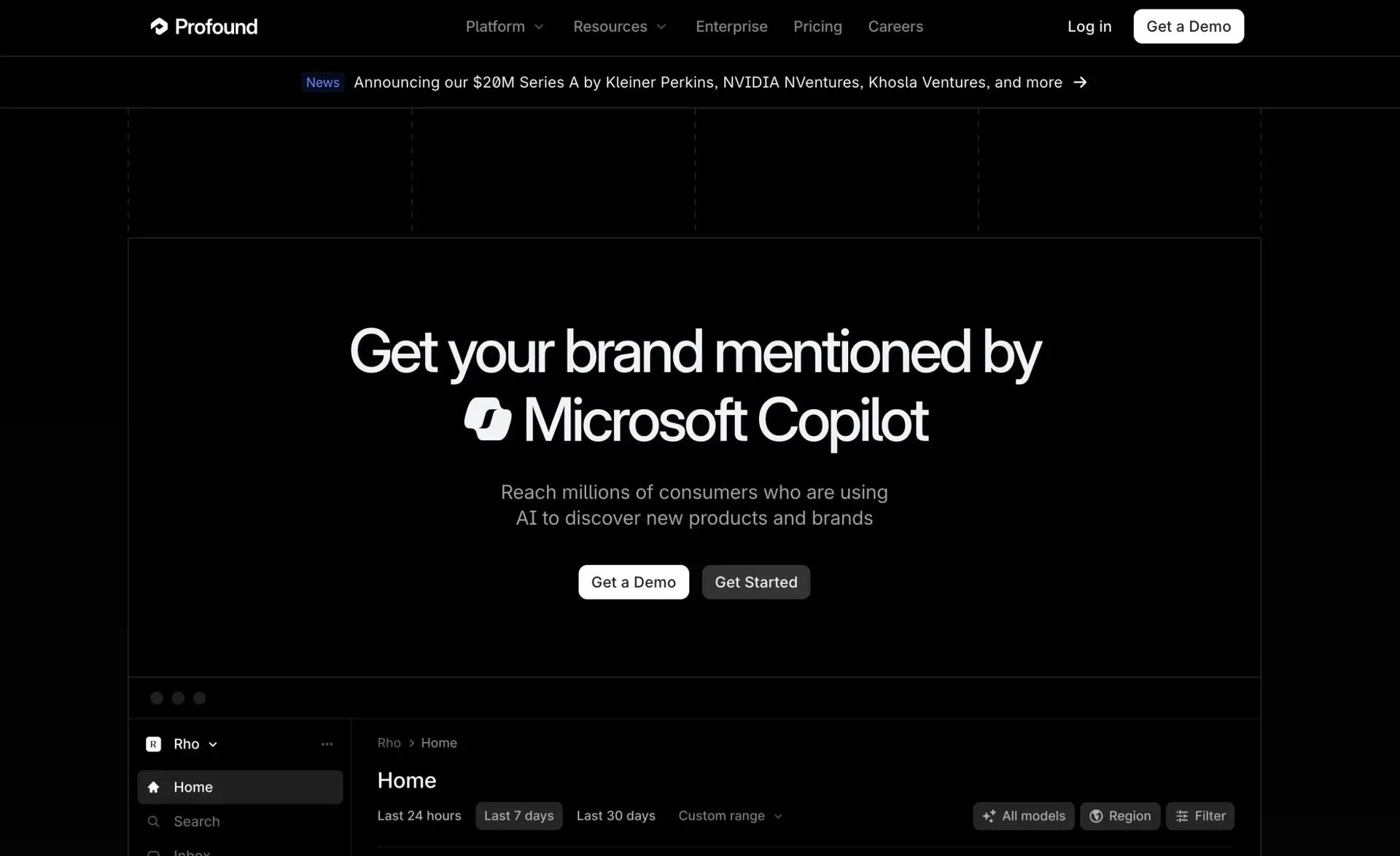
Ever wondered how the big brands ensure that their name comes up in AI search results? Tools like Profound help them. Profound was recommended to me recently by an expert, above the alternatives — so they are on my radar, and should be on yours, too. 👀
While the fundamentals of AEO (Answer Engine Optimization) remain closely tied to SEO (from what I understand 😅), this is still an area worth paying attention to. Gone are the days of only looking at SEO tools like Ahrefs, and in come these specialized players for AEO. Even if you aren’t in the market for a tool like this, I recommend learning about them.
They have some pretty cool guides here: https://www.tryprofound.com/guides
If you have a moment, will you let me know if you enjoyed this edition of the newsletter? Thank you!
What Did You Think Of Today's Newsletter? |
How can you support this newsletter? 🤔
1. Share this newsletter with friends, they can sign up here.
2. Post about the newsletter on social media, with a link to subscribe!
3. Respond with your thoughts and suggestions on the newsletter!
4. If you are interested in purchasing one of my recommended tools, use the affiliate link in this newsletter to purchase it. It helps boost my content creation efforts, so I can do more cool free stuff for this community!
5. Run marketing at a brand? Respond to this email to inquire about sponsoring this newsletter in the future (this is sold out for now, but you can still inquire and join a waitlist!).
Thanks for reading,
❤️ Sara
Continue Reading
Email Is More Important Than ABM or AI
Email is your most important channel -- I'll teach you why & how to take care of it.

My new 30/60/90 Day Marketing Operations Ramp Up Plan
Use my free template to set yourself up for success in a new role or even your current role

The Marketing Operations Strategist Newsletter
Join 3,500+ operations professionals. Get actionable MOPs tips every month.